
Holiday let health and safety: A complete guide
Complying with health and safety requirements
As the owner of the property, it is your responsibility for the health and safety of your guests. You have a duty of care to keep them well during their stay, but you also want to ensure that you have reduced your liabilities should an accident happen. Creating a complaint and safe environment, will allow both you and your guests to relax, safe in the knowledge that potential risks have been eliminated. Keep reading to find out more on the holiday let health and safety requirements.
How can Cottages on the Coast help?
As much as it can be both fun and rewarding to run a holiday cottage, alongside this you also have a significant responsibility to make sure your guests are safe and protected. As a homeowner with Cottages on the Coast, we will not only assist you with marketing your property, sourcing bookings, and dealing with customers, but we are also on hand to provide expert advice on the Health & Safety requirements for your holiday let property. With over 10 years’ experience in the holiday let market we have a wealth of knowledge on legislation in the self-catering market.
On top of this, as a homeowner with Cottages on the Coast, you can access our ‘Full Management’ package. This provides you with the added benefit of us arranging your annual Gas Safety Certificate and completing your property fire risk assessment and access guide.
Below we will further detail the important health and safety requirements to be aware of when letting out a holiday property.
Landlord’s gas safety certificate
If there is gas in the property you will need, as a legal requirement, to obtain a ‘Landlord’s Gas Safety’ certificate. The inspection should be carried out by a heating engineer registered on the ‘Gas Safe Register‘. We strongly recommend that you leave a copy of your current gas safety certificate in the property.
As part of our Full Management package, we would arrange the Landlord’s Gas Safety certificate for you and then renew it on an annual basis. This means you are safe in the knowledge this will always be up-to-date and fully compliant.
Oil safety
Many holiday properties are in rural village locations and do not have access to mains gas. In these instances, oil can be used to run your boiler and other heating and cooking equipment. Even though there is no legal requirement for you to obtain an oil safety certificate, you are duty-bound by law to have any oil-fired appliance serviced in accordance with the manufacturer’s instructions.
If your holiday property has an oil-fired boiler or and other oil-fired equipment, then it is strongly recommended that you have your appliance check on annual basis by a OFTEC registered technician. As with all these things, the safety of your guests is paramount. It is also just good practice to have a qualified technician inspect your appliances. This means they can ‘head off’ any issues before they arise. The last thing anyone wants is your boiler breaking down during the middle of a guest’s stay.
An OFTEC Registered Technician will also be up to date in current legislation. So, they can ensure that your property is complaint when it comes to all other matters of oil safety, such as the storage of oil at your property.
Fire risk assessment
As all holiday homes are classed as business premises it is mandatory to carry out a fire risk assessment of your property. Properties that are within an apartment complex will also need a separate fire risk assessment for the communal areas. You should speak to the person or company who manages the apartment complex for a copy of this.
A fire risk assessment is used to highlight potential fire risks and hazards at your holiday property. When performing a fire risk assessment, there are four main areas that you will need to consider.
- Identify fire hazards
Think about how a fire could start on your property
- Identify people at risk
This could be your guests, yourselves, housekeeper, contractors etc.
- Evaluate the risk
Form a plan to reduce/remove any identified risks
- Record, plan and inform
Keep a record of the findings and actions from your risk assessment, update at least on an annual basis
Important fire safety considerations to include in your fire risk assessment
- Fit smoke alarms – at least one on each level of the property
- Ensure there is a working carbon monoxide alarm for any room that has a gas appliance, oil appliance, or solid fuel burner
- Fire fighting equipment should be referenced in your fire risk assessment e.g. fire blanket in the kitchen
- Consider having your chimneys swept on at least an annual basis to reduce the risk of chimney fires.
- Keep torches in the house for guests to act as emergency lighting if required
For more information see Fire Safety Law in the self-catering market. We are of course happy to discuss the fire risk assessment aspects of your property in further detail. As part of our Full Management package, we would compile the fire risk assessment so you can sign off the document and renew it on an annual basis.
Access guide

In connection with the Disability Discrimination Act (2005), it is a requirement you provide an access guide for your holiday home. Your access guide will provide accurate, detailed information on the facilities and services, within and around your property. We will keep a copy of your access guide on record and also load a copy onto the property page on our website. This means that guests have a full understanding of the facilities of the property prior to their stay.
As part of our Full Management package, we would compile the access guide for you and then you would need to sign off the document and update when appropriate.
Electrical safety
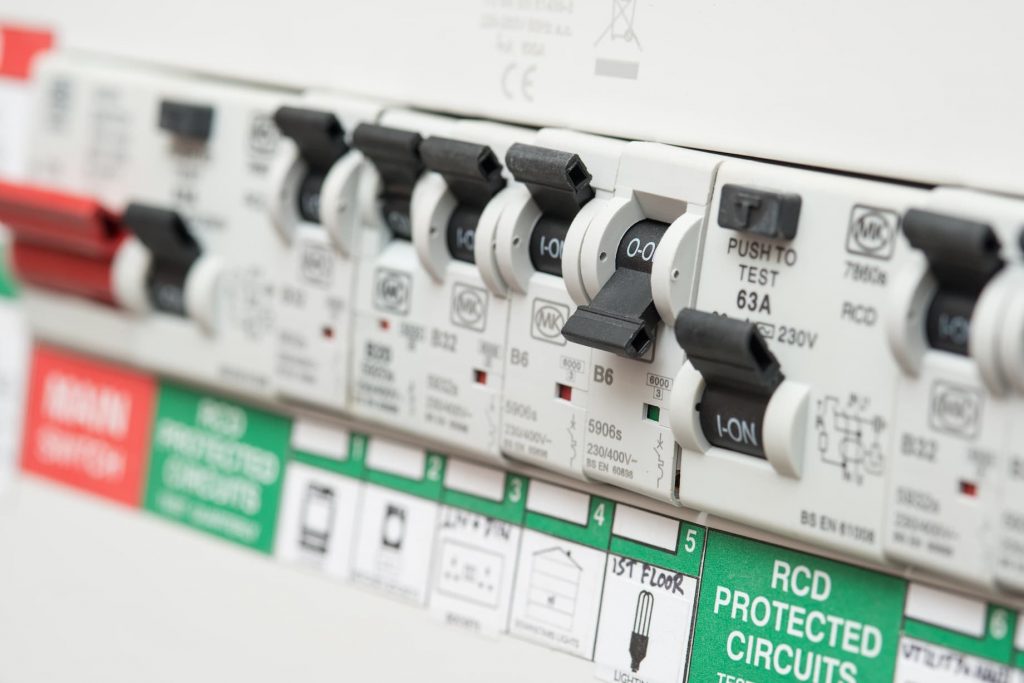
On 1st June 2020, the new regulations for all private rental landlords on electrical safety for property letting came into force. One of the main features of this was that all privately rented properties must have a valid EICR (Electrical Installation Condition Report).
Whilst the new legislation does not currently include holiday lets, you as a holiday homeowner are required, by law, to ensure that all electrical appliances, circuits and fixed installations within the property are safe and not hazardous to guests. Therefore, you have a duty of care to ensure your property and guests are safe and your liabilities are reduced. As such, we recommend that you have a qualified electrician assess your property and have a valid EICR in place prior to opening up to guests.
What is PAT testing and is it a legal requirement?
PAT Testing is the examination of electrical appliances, checking them for potential defects or hazards. This refers to any moveable items, such as a toaster, TV, kettle, lamps, etc.
PAT Testing is not a legal requirement, but as with the EICR checks, you as a holiday homeowner, have a duty of care to your property and guests. So even though PAT testing itself is not legally required, it simply helps you to protect yourself by ensuring that you are complying with these regulations.
As a local company, we are connected with many local contractors, including qualified electricians. We would be happy to recommend any of these to perform ECIR and PAT Testing for your property.
Water safety
There are a number of aspects of water safety to think about when setting up or managing your holiday let property. One of the main aspects of water safety is controlling the Legionella risk.
What is Legionella and how do I control the risks?
Legionella is a bacteria that can cause a potentially fatal form of pneumonia. It can grow where conditions are favourable, which are likely to be all human made hot and cold water systems and devices. There is no specific law on Legionella. However, like with electrical safety in private rented properties, you as an owner have a ‘duty of care’ under the larger health and safety letting law. Under this law, you are obliged to undertake a Legionella risk assessment for your property. Luckily, the risks for ‘standard’ water systems are very low and in this instance, you should not require a professional to perform your Legionella risk assessment.
You should consider these measures to ensure you are minimising the risk of the Legionella bacteria spreading.
- Inspect your cold water storage tanks
Ensure you have a tight-fitting lid on your water tanks, so there is no way debris or rodents getting into the system.
- Turn your hot water cylinder thermostat to at least 60°C
The Legionella bacteria cannot survive in water above 60°C
- Ensure there is no redundant pipework or ‘dead legs’ in the property
These are areas where water can sit and become stagnant
- Ensure showerheads are regularly cleaned and disinfected
These can hold water and be a breeding ground for bacteria. Your housekeeper should be cleaning the showerheads every changeover, so this shouldn’t be too much of an issue.
- Flush out the system if the property has been left vacant for a period of time
The risk of the Legionella bacteria can be heightened for properties that have been vacant. Prior to letting run all the taps on a high heat, flush toilets and disinfect these areas.
- Air Conditioning units, swimming pools and hot tubs require extra consideration.
These features are all popular with guests, but they do require additional safety management. We would recommend that you have qualified engineers/ technicians to maintain your air conditioning, swimming pools and hot tubs.
What if my property has its own private water supply?
If your property is not on mains water and has its own private water supply, such as a well, then you will need to adhere to the Private Water Supplies Regulation 2009. You will need to ensure that your water has been tested before you commence holiday letting. You will need to contact your local authority, as they are responsible for regulating private water supplies. They will carry out a risk assessment at least every 5 years. This will set the parameters of your duties, any improvements required and how often the water will need to be tested.
Insurance/Public liability

You should ensure that your property is fully covered under buildings and contents insurance and that your insurer is aware the property is used for holiday letting purposes. It is vital that your public liability insurance is adequate and we would recommend no less than £ 2 million or not less than £ 5 million for an occupancy of eight people or more. We can provide you with details of companies who specialise in holiday home insurance.
General holiday let health and safety considerations
As you will have noted, there are a number of specific requirements and regulations to check against your holiday property. What can sometimes happen, is that the general health and safety aspects of a holiday let can be overlooked. These are often the most logical and day to day risks that your guests may encounter.
Below is a list of helpful tips regarding general holiday let health & safety. However, with all these things, we would recommend us visiting the property prior to letting, so you get the benefit of our expertise in these matters.
- Provide handrails for all staircases
- Windows, if easily accessible, should be fitted with opening restrictors
- Glass doors should be fitted with safety glass to the current British/ European standards
- Balconies should be of sound construction and have the appropriate railings/ balustrades in place
- Identify and correct any slips, trips or hazards
- Provide warnings if there are potential risks in the property, such as low ceilings
- Make sure that access paths to the property are clear, safe and well-lit
- If the property has a garden that is advertised as fully enclosed, there should be no gaps in fencing or boundary barriers. A fully enclosed garden feature is popular with pet owners and family parties for this reason.
- Water is a potential hazard, especially for children. Ponds and water features, fenced and unfenced, should be clearly advertised in the marketing information for the property
- Childproof your holiday property if it is family-friendly. The equipment you provide needs to be spotlessly clean, well maintained, in good condition and meet current British and European standards
- Stairgates should be provided if the design of the stairs allows. This helps with the safety and management of children and pets within the property
- Cleaning fluids should be stored out of reach of children, preferably in a lockable cupboard
- A furnished accommodation must comply with the Furniture and Furnishings (Fire) (Safety) Regulations 1988. This applies to all soft furnishings, including upholstered furniture, beds, headboards, mattresses, cushions and pillows. It does not apply to antique furniture or furniture made before 1950
Help! I’m overwhelmed by all of this…..

At first glance, understanding the holiday let health and safety requirements and regulations may seem complicated. However, once you break it down and have the reassurance of a local, experienced holiday let agency to assist you, then the whole process can be fairly straightforward.
As a homeowner with Cottages on the Coast, we are on hand to provide expert advice. With over 10 years’ experience in the holiday let market we have a wealth of knowledge on legislation in the self-catering holiday let market. You also have the option of our Full Management package, meaning we can take a lot of this off of your hands. Including arranging your annual Gas Safety Certificate, performing your fire risk assessment, preparing your access guide and two property maintenance inspections per annum.
This means as a homeowner you are safe in the knowledge that we are supporting you to ensure that your holiday let meets all the necessary health and safety requirements.
To find out more about letting with us and what makes us different from the rest, book a no-obligation property visit.
Want a no-obligation property visit? Click here
Disclaimer: At the time of publishing, Cottages On The Coast has taken all reasonable care to ensure that the information contained in this guide is accurate. However, no warranty or representation is given that the information is complete or free from errors or inaccuracies. This guide contains general information about laws applicable to holiday properties. This information is not advice and should not be treated as such. Compliance with legislation is the responsibility of the holiday property owner and Cottages On The Coast assumes no liability in this regard. This guide is not intended to be a definitive statement of the law in England & Wales. If you require precise or more detailed information regarding financial, legal and tax legalization we recommend you seek professional advice.
Latest blog posts

Tee Off in Paradise: North Devon’s Best Golf Courses with Cottages on the Coast
Whether you’re perfecting your swing or enjoying stunning views, a golf break with Cottages on the Coast makes for an unforgettable escape.
North Devon’s Coastal Cuisine: Seafood, Cream Teas and Local Flavour
Discover the flavours of North Devon’s coastal cuisine, from harbour-fresh seafood to traditional Devon cream teas and vibrant local food markets.

Which of North Devon’s Coastal Towns and Villages Are Right for Your Staycation?
Find out which of North Devon’s coastal towns and villages best suit your staycation, from lively seaside spots to quiet harbour communities.
Subscribe for last minute deals & offers
Be the first to hear about new cottages, special offers and other great deals. No spam just things you want to hear about!